
A car accident can leave you shaken, sore and unsure what to do next. Even when the damage looks minor, the hours and days that follow can bring medical concerns, insurance questions, missed work and uncertainty about who is responsible.
In Ontario, the safest approach is to focus first on health and safety, then preserve accurate information. The goal is not to build a legal case at the roadside. It is to make sure injuries are addressed, reporting obligations are met and important evidence is not lost if an insurance or personal injury issue develops later.
Stop your vehicle and check whether anyone is hurt. If someone appears injured, there is an immediate danger or emergency assistance is needed, call 911. If the vehicles can be moved safely and no one requires them to remain in place, move out of active traffic where possible.
Do not assume that everyone is uninjured simply because they can walk or speak. Adrenaline can temporarily mask pain, and symptoms such as headaches, dizziness, neck pain, back pain or difficulty concentrating may become more noticeable later.
Ontario requires collisions to be reported to police when someone is injured or when damage to vehicles or other property exceeds the applicable reporting threshold, which is currently $5,000. Other circumstances, such as suspected impaired driving or a driver leaving the scene, may also require police involvement.
Depending on the circumstances and location, police may attend the scene or direct the drivers to a Collision Reporting Centre. If you are unsure whether a report is required, contact the local police service rather than guessing.
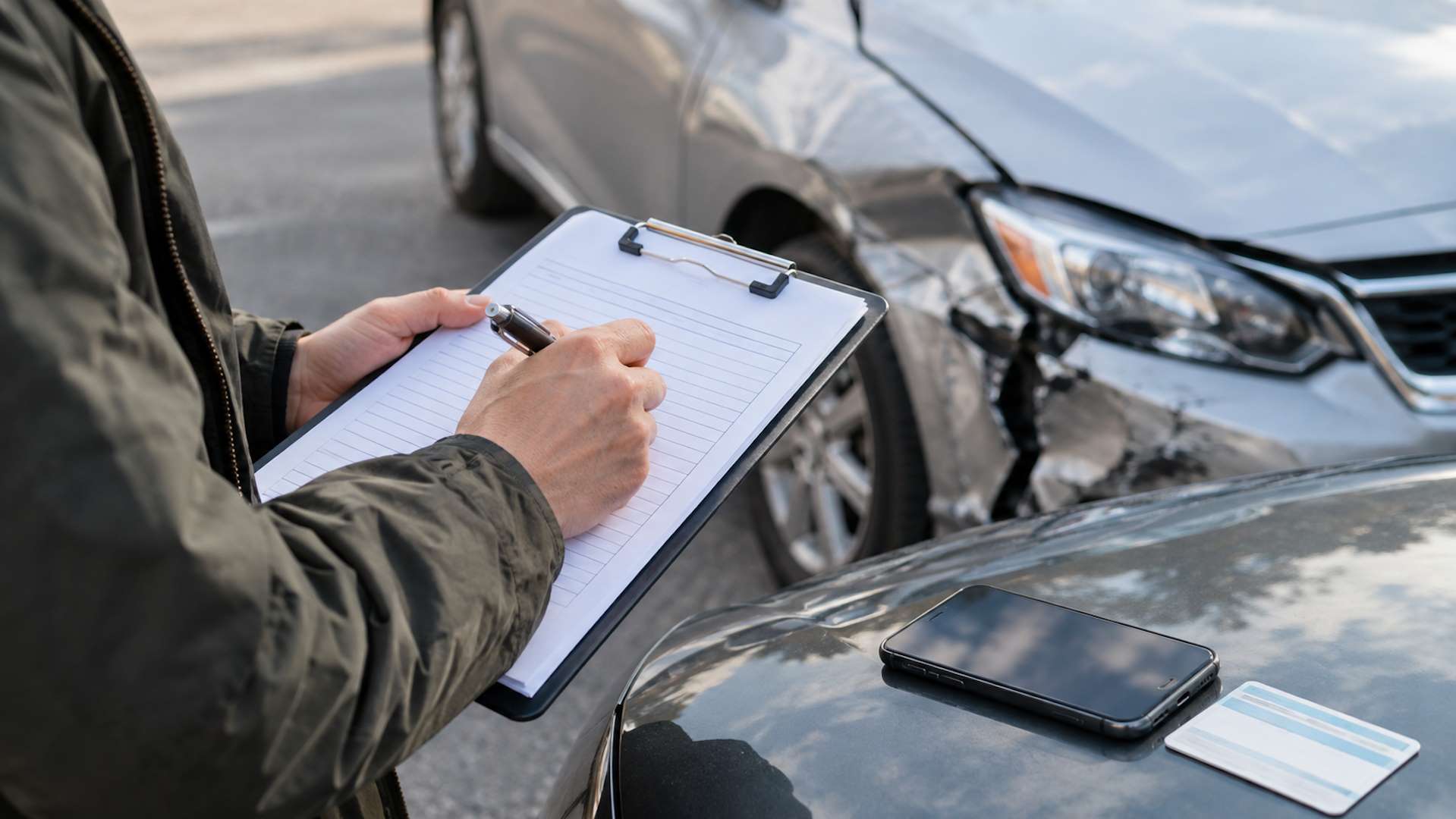
Exchange names, contact information, driver’s licence details, licence plate numbers, vehicle information and insurance details with the other driver. If witnesses saw the collision, ask for their names and contact information as well.
If it is safe, take photos or video of vehicle damage, vehicle positions, the roadway, traffic signs or signals, weather conditions, debris, skid marks and any visible injuries. Make brief notes about what happened while the details are fresh. Avoid arguing about fault at the scene.
Some injuries are obvious immediately; others are not. Seek appropriate medical care if you are hurt or if symptoms develop after the collision. Explain that the symptoms followed a motor vehicle accident and follow reasonable treatment recommendations.
Medical records can become important because they create a timeline of the symptoms, treatment and recovery. Long gaps in care can also make it more difficult to understand whether later complaints are connected to the collision.
Notify your automobile insurer promptly if you intend to make a claim. Ontario accident benefits may provide support to people injured in motor vehicle accidents regardless of fault. For policies entered into on or after July 1, 2026, medical, rehabilitation and attendant-care benefits remain mandatory, while many other accident benefits are optional depending on the policy.
Keep copies of forms, emails, receipts, claim numbers and adjuster contact information. If you miss work, also keep employment records showing lost time or reduced income.
An early offer can be tempting when expenses are adding up, but the full effect of an injury may not be known immediately. Before signing a release, understand what rights are being settled and whether accepting the offer could prevent a later claim if symptoms worsen or new treatment needs emerge.

Legal advice can be useful when injuries are continuing, fault is disputed, benefits are denied, income has been affected or an insurer is asking you to settle before the medical picture is clear. The right next step depends on the facts, the insurance policy and the nature of the injuries.
This article is general information about Ontario law and is not legal advice.